

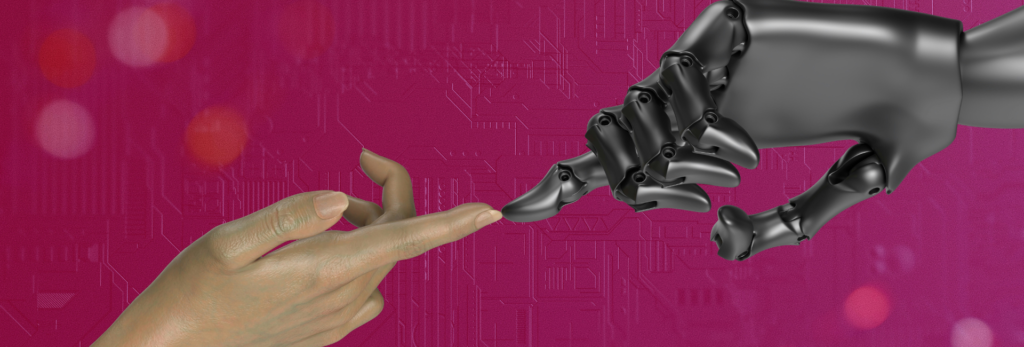
AI has turned the world upside down and inside out.
It is suddenly increasingly challenging to know what is real. Scrolling our social feeds, we find ourselves factchecking whether the film we’ve just watched a trailer for actually exists, or being awestruck by an incredible feat of physical prowess that suddenly doesn’t ring true… But surely the smiling face of this influencer you’ve just come across is real? Maybe… Maybe not?
In the influencer economy, AI has evolved rapidly – from a behind-the-scenes productivity tool to something far more complex and controversial. The question is no longer whether AI has a place in influencer marketing, but how it can be used without eroding the trust brands have worked so hard to build.
The influencer economy has quickly embraced AI, using it throughout the workflow. In fact, 91% of influencers are currently using AI at some point in the content creation process. Whether it’s editing images, drafting scripts, generating captions or analysing performance data, AI has dramatically reduced the hours once spent on repetitive, fiddly tasks. For creators operating in an always-on content cycle, that efficiency is invaluable.
But AI is not just a tool. In some cases it is the end product. Entirely artificial influencers are building audiences and securing brand partnerships. Digital twins – hyper-realistic digital versions of real people – are enabling creators to scale themselves globally. And then there is the murky territory of deepfakes, blurring the lines between innovation and manipulation.
AI in influencer marketing has evolved from assistant, to collaborator, to creator.
So how do audiences feel about this shift?
Industry & consumer attitudes are mixed and appear to be moving in different directions. According to a report by Billion Dollar Boy, in 2023 60% of consumers preferred AI creator content over traditional creator content. By 2025, that had dropped to just 26%. The sharp decline suggests something important – novelty alone does not sustain trust. What initially felt futuristic and ahead-of-the-curve may now feel too artificial, or even deceptive.
Brand experimentation with AI influencers reflects this tension, and has been wildly hit and miss.
Prada’s collaboration with virtual influencer Lil Miquela was widely seen as a success, reinforcing the brand’s tech-forward positioning. Meanwhile, when SheerLuxe introduced Reem, its AI Fashion & Lifestyle Editor, the backlash was swift and brutal. Critics accused the brand of depriving “human journalists of a job” and promoting unachievable beauty standards.
Even platforms seem conflicted. X has integrated its AI tool, Grok, directly into the user experience, signalling endorsement of AI-driven interaction. At the same time, YouTube has moved to demonetise fully AI-generated videos in certain contexts, implying caution.
The line between what is ok and what is not appears to be ever-shifting – but audiences are paying attention.
More than a year after launch, a glance at SheerLuxe’s @reembot account still reveals critical comments on nearly every post, with followers asking for recommendations from real people instead. One commenter wrote:
“This is awful, please stop it. 4.1 billion women on the planet that have real stories, create real art and have inspiring stories — these are the women that deserve a platform to be heard and seen, not this.”
When AI is perceived as replacing rather than enhancing human creativity, trust erodes quickly. Poor execution only fuels the growing “AI slop” problem across social feeds, from Instagram to LinkedIn. Meanwhile, limited regulation leaves space for misuse, deepening consumer scepticism.
And yet, for many well-intentioned creators and marketers, AI remains a powerful tool for creativity and efficiency in an increasingly competitive market. It is not going away, and ignoring it is not a viable strategy.
The instinctive reaction may be to say no – particularly in regulated industries such as health or financial services, where trust and security is paramount. But rejecting AI outright may mean missing opportunities to improve efficiency and performance without compromising authenticity.
The key is understanding where AI adds value and where it risks overstepping.
Start with augmentation, not replacement
For many brands, the most effective use of AI is behind the scenes. AI-driven influencer discovery tools, performance analytics, and automatically generated captions can provide a strong starting point for expert human oversight. Used this way, AI enhances productivity without altering the human-ness audiences value.
Use AI to scale strategically
Taking a step further, working with virtual influencers or digital twins can be incredible beneficial in certain scenarios. Multi-market campaigns requiring local nuance at scale, or campaigns operating under tighter budgets where working with multiple “real” influencers isn’t realistic, may benefit from digital assets that can adapt quickly and consistently. The critical question is whether the technology serves the strategy or distracts from it.
Plan for transparency – and backlash
Deciding to work with AI influencers requires internal alignment and a clear test-and-learn mindset. With audience confidence wavering, scenario planning is essential. Brands should anticipate possible reactions, establish clear disclosure practices, and be prepared to respond quickly if sentiment turns negative. As with all things customer-facing, thinking like your customer base is crucial.
AI in influencer marketing is a spectrum… At one end, AI quietly ticks over in the background, improving efficiency and insight. At the other, it replaces the human face entirely. Brands must decide where they sit on that spectrum, and why.
There is no question that influencer and creator marketing remains incredibly powerful when executed well. With the global influencer market now valued at approximately $33bn, and mounting evidence that influencer campaigns drive long-term impact and ROI, the opportunity is huge.
So, the question is not whether brands will commit to influencer marketing, it’s how they will integrate AI into the equation. Whether you fully embrace AI influencers or simply dip your toes into AI-assisted workflows, success will depend on balance – between innovation and authenticity, scale and sincerity, efficiency and empathy.
With an experienced specialist influencer marketing team, we help brands navigate that balance. From AI-generated content and digital twins to entirely AI-driven personalities, we can help you determine whether AI offers something that enhances – rather than replaces – the human connection your audience trusts. Get in touch.