

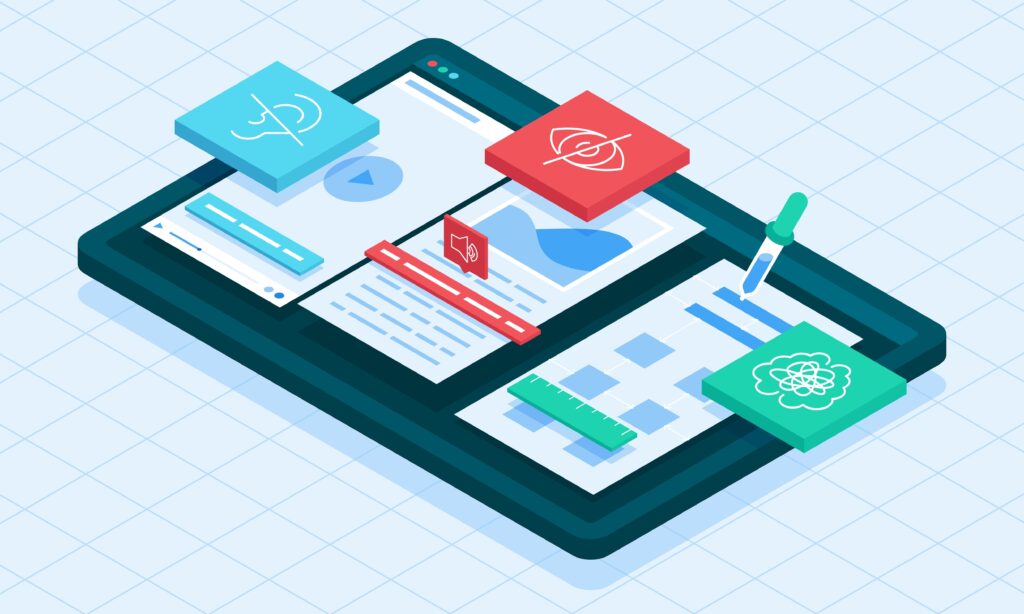
Around 15% of the world’s population (or just over one billion people) live with some form of disability, and yet people are often restricted from consuming information and entertainment because the digital accessibility of the content just hasn’t been considered.
This got us thinking at Speed about our own content and how we might be able to make our communications more inclusive, so familiarising ourselves with digital accessibility and the role it can play in PR and on social media felt like the right place to start.
For those not already aware, digital accessibility refers to designing websites, documents, content, tools, and technologies so that people with disabilities, including auditory, cognitive, neurological, physical, speech, and visual, can use them.
As a PR and communications agency, we’re always thinking about the effectiveness and impact of our communications. To increase our understanding from a digital accessibility lens, we had the opportunity to join a session with accessibility consultant Joel Strohmeier who could tell us everything there is to know.
Before we met Joel, we decided to familiarise ourselves with digital accessibility together as an agency, highlighting the key terms like Alt Text, readability and remediation, and understanding the benefits of creating more accessible communications for our own audiences and those of our clients.
We found that digital accessibility can be an incredibly useful asset for a PR and marketing agency, helping to expand market reach, enhance SEO, improve brand perception and boost user engagement, and this only fuelled our motivation to learn more about it.
The big brands leading by example
With the marketing benefits clear to see, it’s no wonder that some huge brands have been championing digital accessibility. We looked into some of the standout brands to give us some examples of best practice:
Feeling inspired by these brands and realising the potential of digital accessibility, we started doing our own research into how communications and marketing agencies can be more digitally accessible in the world of PR.
We stumbled upon some amazing resources from industry professionals that gave us everything we needed to pull together our very own digital accessibility toolkit and checklist which will help our team understand digital accessibility and start to make our content and comms more accessible.
Below is a list of the resources that we used, with links to each one:
With the prep done and the whole team a bit more familiar with the concept, it was time to meet with Joel and explore digital accessibility in greater depth.
In just an hour, Joel took us through the key elements of digital accessibility, the people that it affects, the essential considerations and strategies needed to achieve truly accessible content, and more.
Here are our 5 top takeaways from the session:
The talk with Joel, and our wider focus on digital accessibility, has left us with a much stronger understanding of the concept, how it affects individuals, brands and industries including our own.
For now, as we reflect on these insights and learnings, our key takeaway is the potential digital accessibility has to develop and empower communications and content. By making it more accessible and inclusive, content can be opened up to wider audiences and the key messages and purpose of communications can be understood by all.